
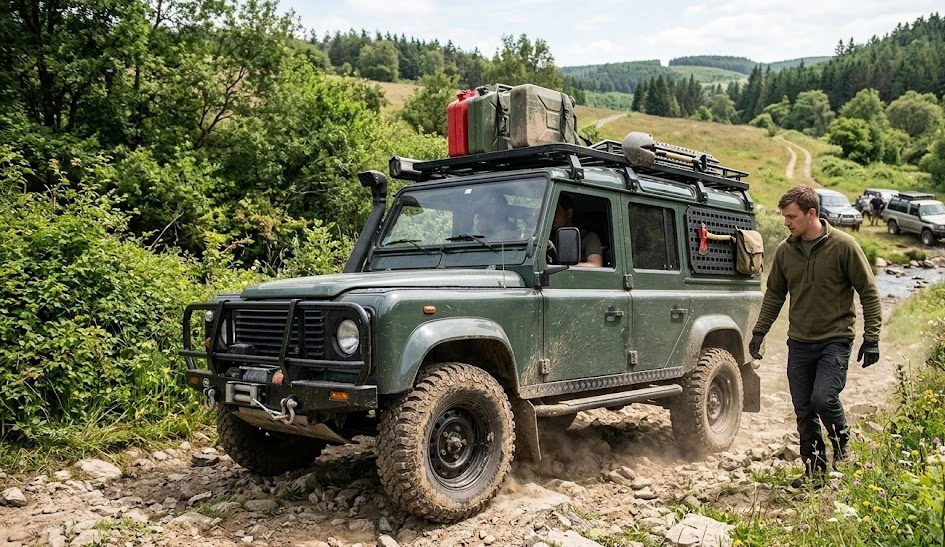
Starting your off-road adventure requires, first and foremost, a mechanically sound 4x4 vehicle, suitable AT or MT tires, and a basic recovery kit (strap, shackles, winch). However, the key to success is not extreme engine modification, but smart vehicle preparation focused on underbody protection and gear organization, which must be secured and easily accessible out on the trail.
First Steps on the Trail: Choosing a Platform and Preparation
Before you head out on your first route, you need to understand that off-roading is not just about driving, but primarily about managing your vehicle's capabilities. Choosing the right vehicle is the foundation, but its preparation determines whether you will make it back under your own power. Many people make the mistake of investing in expensive accessories before checking the mechanical condition of their base platform.
Below is a breakdown of the elements that determine how well your vehicle will handle tough conditions:
| Vehicle Element | Role in Off-Roading | Priority for Beginners |
|---|---|---|
| Tires (AT/MT) | Guarantee traction in mud and protection against punctures. | Critical |
| 4x4 Drivetrain & Transfer Case | Allow for tackling steep climbs and obstacles. | Mandatory |
| Suspension | Increases ground clearance and protects components from impacts. | High |
| Interior Organization | Protects the crew from loose, flying gear during rough bumps. | Very High |
Off-Road Gear: What Do You Need in Your Vehicle?
On the trail, any loose item in the trunk becomes a hazard. Preparing your gear is not just about buying a recovery strap, but primarily about its storage system. At Expedition-Gear, we focus on professional solutions that withstand the heaviest shocks and grant you access to tools in seconds.
Your checklist of essential accessories should include:
- Expedition Drawers – The only way to safely separate heavy tools from food and clothes.
- Recovery Kit – A solid kinetic rope, shackles (preferably soft shackles), and protective gloves.
- MOLLE Panels – Ideal for mounting a fire extinguisher, first-aid kit, and an axe in a spot that remains accessible even with a fully loaded trunk.
- Compressor and Pressure Gauge – Essential for airing down your tires on soft terrain and airing back up before hitting the asphalt.
- Ceiling Shelves – An excellent spot for lightweight accessories that must remain clean and dry.
How to Prepare for Your First Off-Road Trip?
Preparing for off-roading is a process that eliminates stress and the risk of vehicle damage. To keep your first adventure safe, it is best to stick to a proven plan:
- Underbody Mechanical Audit – Check the condition of the axles, transfer case, and breathers; water and mud quickly expose any neglected maintenance.
- Install Underbody Protection – Mount engine and transmission skid plates before your vehicle takes its first hard hit against a rock or tree root.
- Organize the Cargo Area – Secure heavy items as low as possible; use drawer systems to keep cargo from shifting while driving on steep side slopes.
- Learn Your Gear – Test your winch and hi-lift jack in a dry run at home, so you know exactly what to do when you are stuck deep in the mud.
- Find a Group or Take a Course – Never go into unknown terrain alone; the presence of a second vehicle or an experienced instructor is the best off-road school.
Starting your off-road journey properly is an investment in knowledge and gear that won't fail at the worst possible moment. Remember that out on the trail, less is more – it's better to have a single well-maintained and well-organized vehicle than an overloaded truck that is difficult to control.