
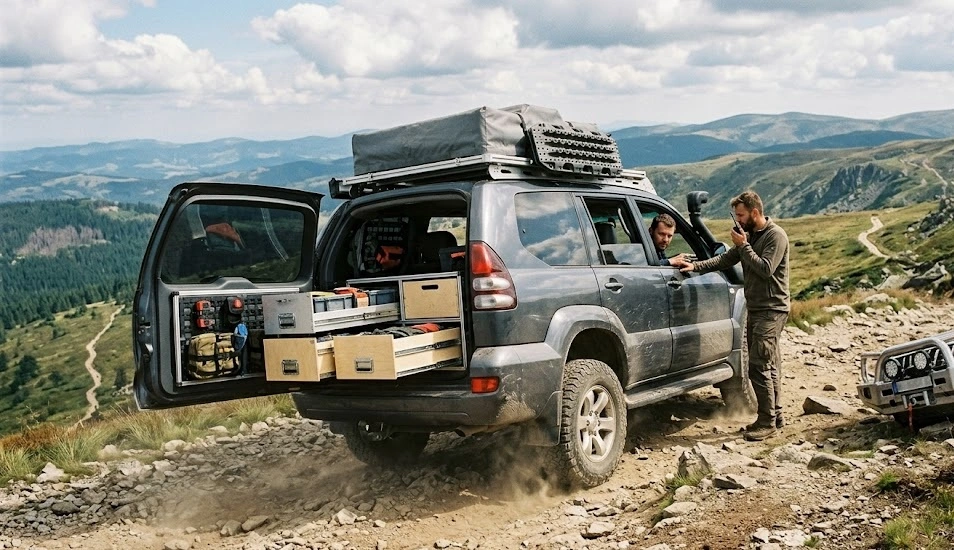
Exceeding the Gross Vehicle Weight Rating (GVWR) is the most common mistake made when building an expedition vehicle, leading to suspension failures and traction issues on the trail. The key to safe overlanding and efficient off-roading is choosing accessories made from lightweight aluminum alloys, which reduce equipment weight by up to 40% compared to steel or plywood. Every saved pound means better handling on side slopes, lower fuel consumption, and more payload capacity for essential water and fuel.
Why Mass Is Enemy Number One on the Trail
Most stock off-road vehicles have a payload capacity ranging between 1,300 and 1,750 lbs (600–800 kg). Once you account for the weight of the crew, fuel, and a rooftop tent, there is very little room left within the GVWR limit for the storage build itself. Out in the mud, excess weight causes the vehicle to bog down faster, while during long overland trips, it drastically compromises handling and increases the risk of frame or axle failure.
| Equipment Element | Weight (Steel / Plywood) | Weight (Aluminum) | Payload Savings |
|---|---|---|---|
| Drawer System | approx. 150 – 200 lbs | approx. 75 – 100 lbs | approx. 85 lbs |
| Roof Rack | approx. 100 – 130 lbs | approx. 50 – 60 lbs | approx. 60 lbs |
| Panels & Shelves | approx. 33 – 45 lbs | approx. 13 – 20 lbs | approx. 22 lbs |
| TOTAL | ~330 lbs | ~165 lbs | You save 165 lbs! |
The Practical Off-Road Advantages of a Lightweight Setup
Using aluminum for 4x4 accessories is the only way to build a vehicle that remains agile and safe. As off-road enthusiasts, we know that excess weight on the roof or at the back of the vehicle shifts the center of gravity—which becomes critical when navigating technical side slopes or off-camber trails.
By choosing a lightweight setup, you get:
- Better Stability – A lightweight roof platform minimizes the risk of a rollover in highly technical terrain.
- Component Longevity – Less mass translates to slower wear and tear on tires, suspension bushings, and brake pads.
- Year-Round Durability – Aluminum does not rust like steel and does not absorb moisture like plywood, which is crucial during frequent water crossings and mud runs.
- Greater Off-Road Capability – A lighter vehicle glides more easily over sand and puts less stress on the drivetrain when powering out of deep ruts.
How to Smartly Prepare Your Vehicle Without Exceeding GVWR
Balancing vehicle weight requires a strategic approach to selecting accessories. To maintain vehicle dynamics and protect the structural components, it is best to follow a proven build plan:
- Baseline Weigh-In – Before installing any accessories, weigh your vehicle with full tanks to determine your actual remaining payload capacity.
- Prioritize Lightweight Materials – Choose 3D-engineered accessories made from premium aluminum alloys, which deliver the same structural rigidity as steel at a fraction of the weight.
- Keep the Center of Gravity Low – Install your heaviest storage components (drawer systems) directly onto the cargo floor, and reserve the roof for ultra-light platforms.
- Utilize Dead Space – Instead of adding more heavy storage boxes, mount window MOLLE panels to distribute the weight of smaller gear to the sides of the vehicle.
- Rigorous Gear Selection – Routinely audit your gear; in professional overlanding and off-roading, everything must have a purpose that justifies its weight.
Proper weight management shows care for your vehicle's mechanics and your crew's safety. In the 4x4 world, professionalism isn't measured by how much gear you can bolt onto your rig, but by its quality and weight optimization, allowing you to drive further where heavier builds have to turn around.