Overlanding is self-reliant expedition travel where the journey itself and independence are the primary goals, rather than tackling extreme off-road obstacles. Unlike traditional off-roading, which focuses on technical challenges and adrenaline, overlanding requires a vehicle configured for ergonomics, low curb weight (GVWR), and logistics. Getting started requires a 4x4 vehicle equipped with professional cargo organization systems, a sleeping setup, and enough supplies to live off the grid.
Overlanding vs. Off-Roading – Key Differences
Understanding the difference between overlanding and classic off-roading is key to smartly investing your budget in vehicle modifications. Although both styles utilize 4x4 drivetrains, their goals sit at opposite poles, directly impacting accessory choice and final vehicle weight.
While off-roading is a sport that demands short-term durability, overlanding is a marathon where reliability and daily living comfort over several weeks are what matter most.
| Feature | Overlanding (The Journey) | Off-Roading (The Challenge) |
|---|---|---|
| Main Goal | Long-distance exploration and self-sufficiency. | Overcoming obstacles and testing vehicle limits. |
| Driving Character | Life on the road, hundreds of miles, camping. | Technical, short, and intense terrain sections. |
| Key Equipment | Drawer systems, rooftop tents, cargo setups. | Winches, MT tires, skid plates. |
| Priority | Ergonomics and low weight (GVWR). | Short-term durability and traction. |
Overlanding – A Journey Built on Freedom
Overlanding is a lifestyle where your vehicle becomes a mobile home. Here, a passion for perfection in space organization is essential. In this form of travel, you aren't fighting the terrain; you're fighting chaos. Properly selected gear ensures everything has a designated spot, eliminating the frustration of packing and unpacking your vehicle daily during multi-week trips.
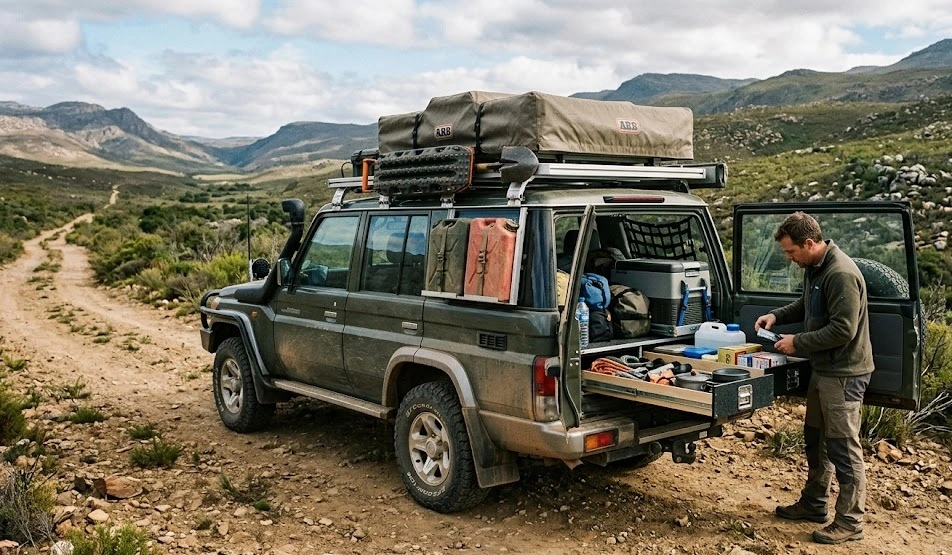
Drawer systems are the foundation, allowing you to separate the kitchen zone from technical gear. Meanwhile, lightweight aluminum setups protect your suspension from overloading, which is crucial when covering thousands of miles on changing road surfaces. Professional gear ensures that even those used to hotel luxuries find comfort sleeping under the stars, as the vehicle becomes a predictable, reliable shelter.
Off-Roading – A Challenge for Driver and Vehicle
Off-roading is the sporty side of 4x4 driving. It's all about technique, traction, and mechanical durability. While an overlander bypasses the worst mud to safely deliver supplies to the destination, an off-roader deliberately seeks out challenges to test their skills and the vehicle's limits. In this world, aggressive Mud-Terrain tires, differential locks, and winches reign supreme. These accessories provide vital insurance when tackling extreme obstacles, but they often come with compromises in comfort during long highway drives.
Essential Gear: What to Buy to Get Started?
Building an expedition vehicle should focus on functionality and weight reduction. Choosing aluminum over steel or heavy plywood preserves payload capacity for water and fuel. Key accessories include:
- Expedition Drawers – Guarantee instant access to your fridge and supplies without having to unpack the entire trunk.
- MOLLE Panels – Mounted by the rear side windows, they turn dead space into storage for first-aid kits and tools.
- Ceiling Shelves – Perfect for storing lightweight, bulky items like sleeping bags or jackets that usually clutter the floor.
- Aluminum Roof Racks – Lighter and quieter than traditional basket racks, providing a stable base for a rooftop tent.
- Recovery Gear – Traction boards and a solid shovel, which are your first line of defense when losing traction in sand or mud.
How to Prepare Your Vehicle for Its First Trip
Properly configuring a vehicle for overlanding is a step-by-step process that prioritizes weight distribution and camp setup efficiency:
- Weight and Payload (GVWR) Audit – Check how much weight you can realistically load into the vehicle, factoring in passengers and full fuel/water tanks.
- Plan Access Zones – Place the heaviest items as low and as close to the center of the vehicle as possible, keeping essentials (water, first-aid kit) within arm's reach.
- Set Up Camp Logistics – Choose a rooftop tent or set up an interior sleeping platform, ensuring proper insulation and ventilation.
- Dry Run Test – Pack the vehicle and set up camp in a controlled environment to verify if your storage system meets your expectations.
- Final Gear Selection – Take only what is necessary; in overlanding, less is more, especially when handling a vehicle in challenging terrain.